Take the quiz to find where you lay on the social contract
Begin QuizOr scroll down for the methodology + more info
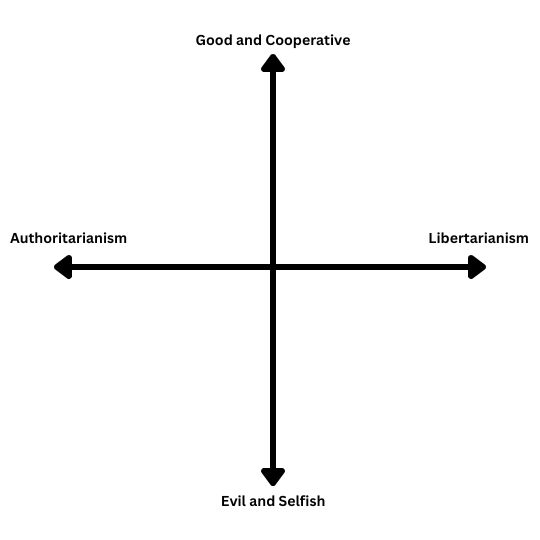
The ultimate premise of the social contract is the definition of the relationship between an individual's freedom and state authority. Many thinkers have attempted to draw a line between the two in an attempt to identify the most "beneficial" balance. Hobbesian thought believes in the need of an absolutist state to overcome the naturally selfish and violent individual. In contrast, Lockean thought believes in the limitation of the state, empowered by the consent of its people, to support the natural rights of the individual. Importantly, the social contract's primary foundation – the relationship between the individual and the state – is heavily dependent on the perceived innate qualities of humans. Logically, the need for a restrictive government will vary vastly depending on the characteristics of the people being governed.
As a sidenote, I think it is really interesting how the environment of thinkers dramatically and obviously shape their perspective regarding the social contract. After witnessing the atrocities and failures present throughout the English Civil War, it makes complete sense why Hobbes viewed humans as evil and the need for a strong government to protect the people from themselves. In contrast, Locke, who witnessed the peaceful success of the Glorious Revolution, believed that humans were naturally good and could work together relatively well, hence his stance on individual freedoms.
Therefore, I've broken down the social contract into a primary premise and a different, although dependent, secondary belief: 1. The relationship between the individual and the state (x-axis) and 2. Human Nature (y-axis). See the explanatory graphic on the right.
After clicking "Begin Quiz," the user is asked many multiple choice questions that, when combined, paint a relatively strong picture of the user's stance on the ideal social contract.
In an effort to prevent user bias, the questions may seem somewhat abstract or loaded -- this is intentional; simply answer to the best of your ability. In an effort to curb bias, both questions and answer choices are randomized.
Once all the questions are answered, the website calculates a value for each of axis. These values (out of necessity) are relative. Consequently, in an attempt to contextualize your score, select points of famous thinkers are presented.
Enjoy! This website was, in part, inspired by the political compass quiz.